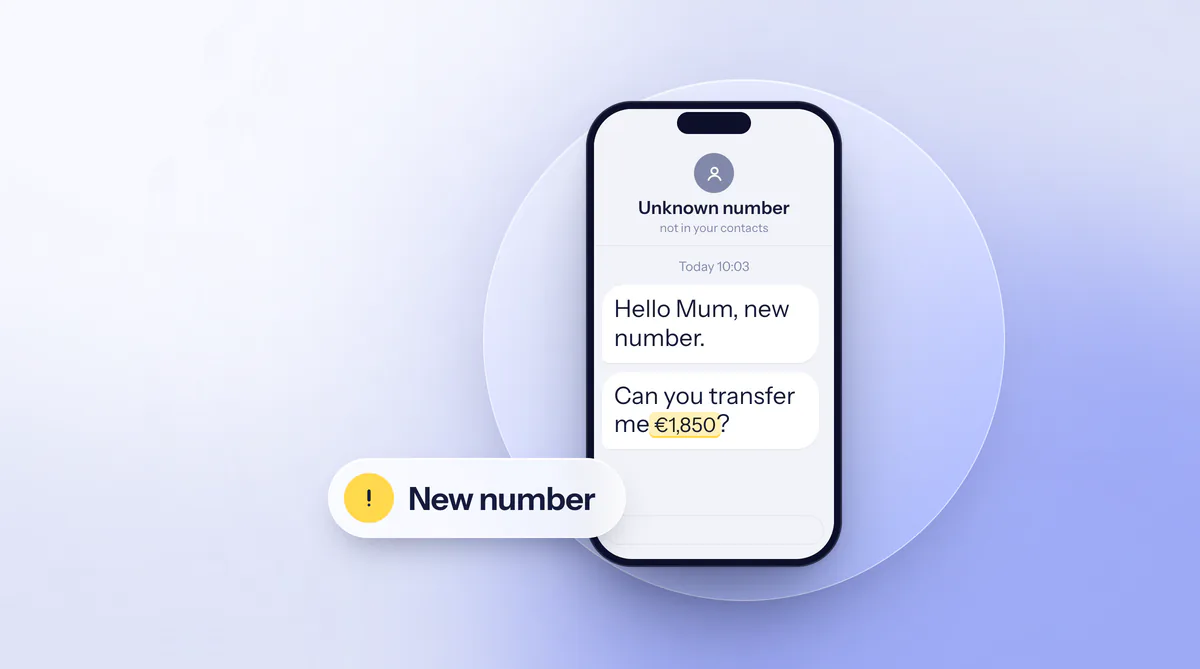
One woman only grew suspicious when her supposed daughter gave a foreign recipient name for the transfer. A call to the old number exposed the fraud. The Verbraucherzentrale (consumer advice centre) describes the case. The scheme starts with a WhatsApp message or a text from an unknown number: the phone is broken, this is the new number. After a few harmless lines it turns to money, according to the German police usually 1,000 to 3,000 euros, because the new smartphone is supposedly not yet enabled for online banking.
How to recognise the message
The phone went in the washing machine, or it broke, or the SIM card stopped being read. You are to save the new number and get in touch via WhatsApp, and since November 2022 there have also been texts asking for a reply via WhatsApp. In the Verbraucherzentrale’s experience the messages almost always contain errors in spelling or punctuation. In July 2026 it wrote that such reports have become very rare, but that this does not mean the attempts have stopped.
According to the police, the offenders may say the money is for a purchase. They add pressure with a supposedly overdue bill that must be paid quickly to avoid debt collection, or with a faked emergency. Your bank also looks at the recipient name since 9 October 2025, because it compares the name and IBAN before you approve a euro transfer. If it reports no match, do not approve the transfer. According to Commerzbank the bank does not reject it automatically, and if you approve despite the warning it is not liable for the misdirected transfer.
According to the police, the accounts you are asked to pay into are presumably opened with forged or misused details. From there the money moves quickly abroad, and the accounts in Germany are then closed again. The police say the BKA (the Federal Criminal Police Office) assumes the offenders are based in the Netherlands. You can have a number that wrote to you looked up under Check a phone number, and the text or a screenshot of the message under Check a message.
Sometimes the message comes from a genuine contact whose account has been taken over, and the other contacts notice nothing. So never pass on the verification code you receive by text at registration, and set up a personal PIN.
What to do now
Do not write to or phone the offenders, not even for fun. The police advise against it because the offenders are trained, may misuse your number for further attempts and may record your voice during calls. The remaining steps come from the police and the Verbraucherzentrale.
What happened?
Only received the message
- Do not pay, do not save the number
- Call your child on the known number
- Block and report the number
- Delete the chat afterwards
Replied, did not pay
- Do not write on, do not phone
- Block and report the number
- Never pass on the verification code, set up a PIN
Transferred money
- Call the bank at once
- Secure the chat history, do not delete it
- File a police report
- Write to the recipient bank with the case number
Passed on login details or a code
- Have access blocked, 116 116
- Report unknown debits as unauthorised
- File a police report
Steps based on the German police crime prevention service and the Verbraucherzentrale, as of 17 Nov 2026.
Sources: German police crime prevention: Messenger fraud; Verbraucherzentrale: Credit card and account fraud
- Do not pay.
Give in to no demand for money.
- Ask on the old number.
The best way is to speak to your child in person. If that is not possible, call the old, known mobile or landline number.
- Block and report.
Block the number and report the incident to the police, and also to the Bundesnetzagentur (the Federal Network Agency) as suspected fraud. Delete the chat and the number only after that.
- Warn your family.
Warn family and friends of every age, because the police say younger people are increasingly falling victim too.
- Secure evidence.
If you have paid, secure the whole chat history, for example with screenshots, and delete nothing.
- Block access.
If you passed on login or card details, have them blocked. The blocking hotline 116 116 blocks credit cards, girocards and online banking, among other things, though the Verbraucherzentrale points out that not every bank takes part.
What is still possible after the transfer
If you made the transfer yourself, it gets difficult. A transfer cannot be reversed once executed, the Verbraucherzentrale writes, and because many transfers are booked in real time, usually not even a quick call helps. The police still advise calling your bank at once, because the money can be recovered in some cases.
The second route runs through the recipient bank. You find it from the IBAN and write to it with the police case number and the transfer details. The recipient bank can consider blocking the account on suspicion of money laundering. In the best case the credit is prevented and the amount recovered. You can have the IBAN looked up under Check an IBAN; further payment routes and deadlines are under Already paid?.
It is different if someone debited your account without your knowledge. The Verbraucherzentrale ties the bank’s duty to refund to payments you did not initiate and authorise yourself. Under Section 675u of the German Civil Code (BGB) the bank must then refund the amount without delay, at the latest by the end of the business day following the day you notify the bank. Under Section 676b you must notify the bank without delay after noticing it. Claims are excluded if you report later than 13 months after the day of the debit.
Where to report it
File a report with the police; in many federal states you can do this online. The police say only reports give them figures on cases and losses and let them investigate in a targeted way. An overview of online stations and offices in Austria and Switzerland is under Where to report it.
If you got a phone call instead of a message, the guide Shock calls and fake police helps. Similar fakes by text are described in Text message fraud and spoofed senders, and the path from chat to request for money with online acquaintances in the guide Romance fraud.