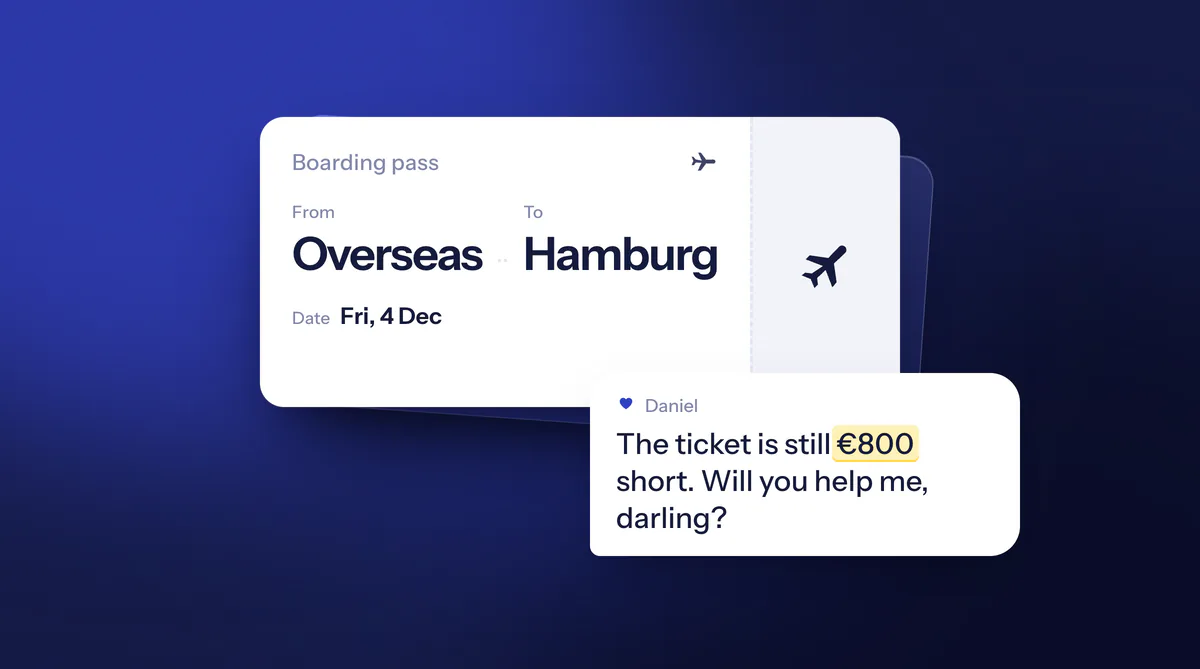
A romantic email in the morning is followed by a short phone call at noon, which is how the German police describe the start. Before long the fraudsters call you husband or wife and talk about a future together. Shortly after a ticket to Germany is booked, something gets in the way, a stolen passport or a hospital stay after a car accident. Then comes the request for money, for an important operation for a child for instance, to be paid by cash transfer such as Western Union or MoneyGram.
How to recognise love scamming
Men in these schemes pose as engineers, architects or soldiers, according to the police, and women as nurses or doctors. A short email in English with an invitation to chat often serves as bait. A reverse image search shows where a photo comes from, and you can search the name online together with the word scammer. A video chat proves nothing either, because AI technology can produce convincing voices and videos, the police say.
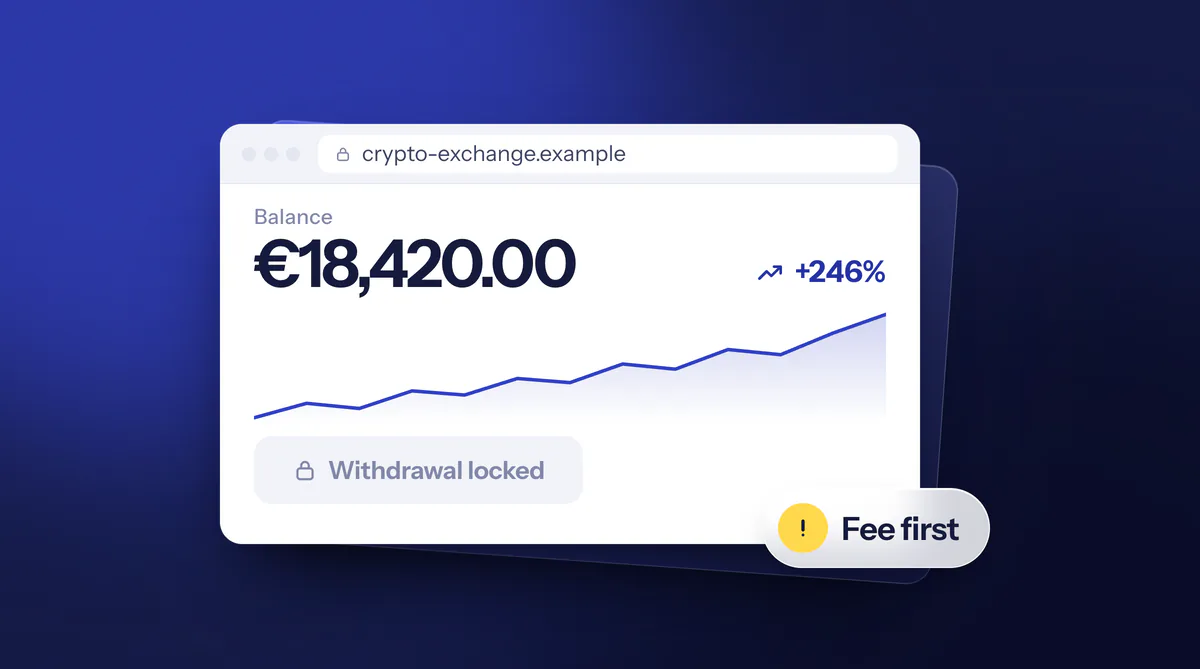
You can have the text or a screenshot of such a message checked on Check a message. An unremarkable result is no guarantee, because the request for money stays the warning sign. If the acquaintance offers you an investment, the guide Crypto platform will not pay out explains how such platforms pay out or fail to.
What the fraudsters want besides money
Some ask for copies of your passport or ID. Others want an invitation to Germany in support of a visa application, or a joint account. Cheques and parcels can put you yourself at risk. Some victims are asked to pay in cheques, the police say, which turn out to be returned cheques, and the account holders are responsible for repaying the bank. Others are asked to forward parcels. According to the police, forwarding or keeping them is illegal and can put victims in serious difficulty.
What to do now
Never transfer money, the police advise. Talk the acquaintance over with friends or family, since an outside view can bring clarity. Everything else depends on whether money has already gone, and by which route.
What happened?
Only money was requested
- Do not pay
- Break off contact
- Secure the chats
- Report the profile to the platform
Paid by bank transfer or card
- Reverse the payment at once if possible, call the bank
- Credit card: ask the bank about a chargeback
- Secure receipts and chats
- File a police report
Paid by cash transfer
- Call the provider’s fraud hotline at once
- Recovery is only possible while the money is uncollected
- Secure receipts
- File a police report
Steps based on the German police crime prevention service and the Verbraucherzentrale, as of 17 Nov 2026.
Sources: German police crime prevention: Scamming; Verbraucherzentrale: Getting money back
- Stop paying.
Send no more money, and no gifts, vouchers or cryptocurrency either.
- Break off contact.
Stop replying and do not send copies of your passport or ID. If you have already sent some, file a police report. Delete nothing.
- Secure evidence.
Save all emails and chat texts on a storage medium and keep your transfer receipts.
- Have access blocked.
If you passed on account, card or login details, have them blocked. The blocking hotline 116 116 blocks credit cards, girocards and online banking. Not every bank takes part, in which case you find the blocking number on your bank’s website.
- File a police report.
If you have suffered a financial loss, always file a criminal complaint for fraud, online in many federal states. Online stations and offices in Austria and Switzerland are under Where to report it.
- Inform the platform.
Report the profile to the provider of the dating platform or network where you met it.
What is still possible after a payment
The police advise reversing payments at once where that is still possible. How far that goes depends on the payment route, and the sooner you act the better the chance. According to the Verbraucherzentrale, a bank transfer you made yourself often cannot be recovered once executed, and a call to the bank usually helps little because many transfers are booked in real time. In their notice on messenger fraud the police still advise calling, because money can be recovered in some cases. The Verbraucherzentrale describes a further route. You find the recipient bank from the IBAN and write to it with the police case number and the transfer details, so that it can consider blocking the account on suspicion of money laundering. In the best case the credit is prevented.
With a credit card you can have the payment cancelled through the chargeback procedure, which may involve a processing fee. An authorised direct debit you return within eight weeks of the debit. With cash transfer services such as Western Union, call the provider’s fraud hotline at once, because the money can only be recovered as long as the recipient has not collected it at a branch. Further payment routes and deadlines are under Already paid?.
Since 9 October 2025 your bank compares the recipient name and IBAN before you approve a euro transfer. If it reports no match, do not approve the transfer. According to Commerzbank the bank does not reject it automatically, and if you approve despite the warning it is not liable for the misdirected transfer. If someone debits your account without your involvement, for example after you passed on login details, the bank must refund without delay under Section 675u of the German Civil Code (BGB), at the latest by the end of the business day following the day you notify the bank. Under Section 676b you must notify the bank without delay after noticing it, and claims are excluded if you report later than 13 months after the day of the debit. The period only runs if the bank has given you the legally required information on the payment.
You can have an IBAN you transferred to looked up under Check an IBAN, and a number that calls you under Check a phone number.