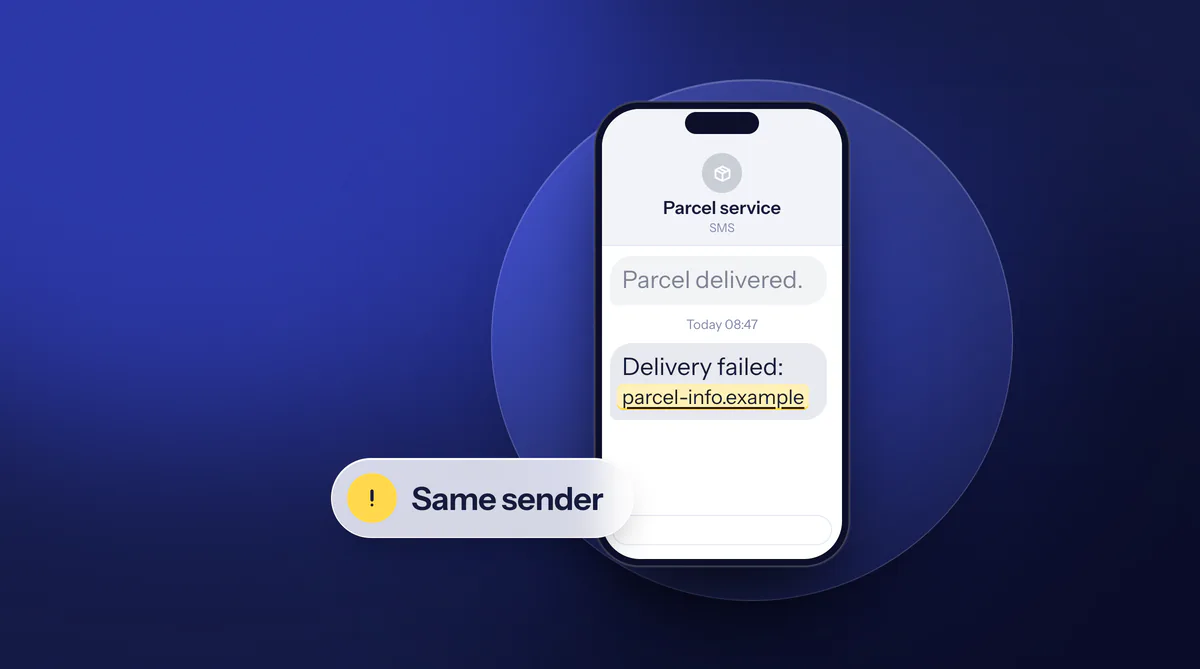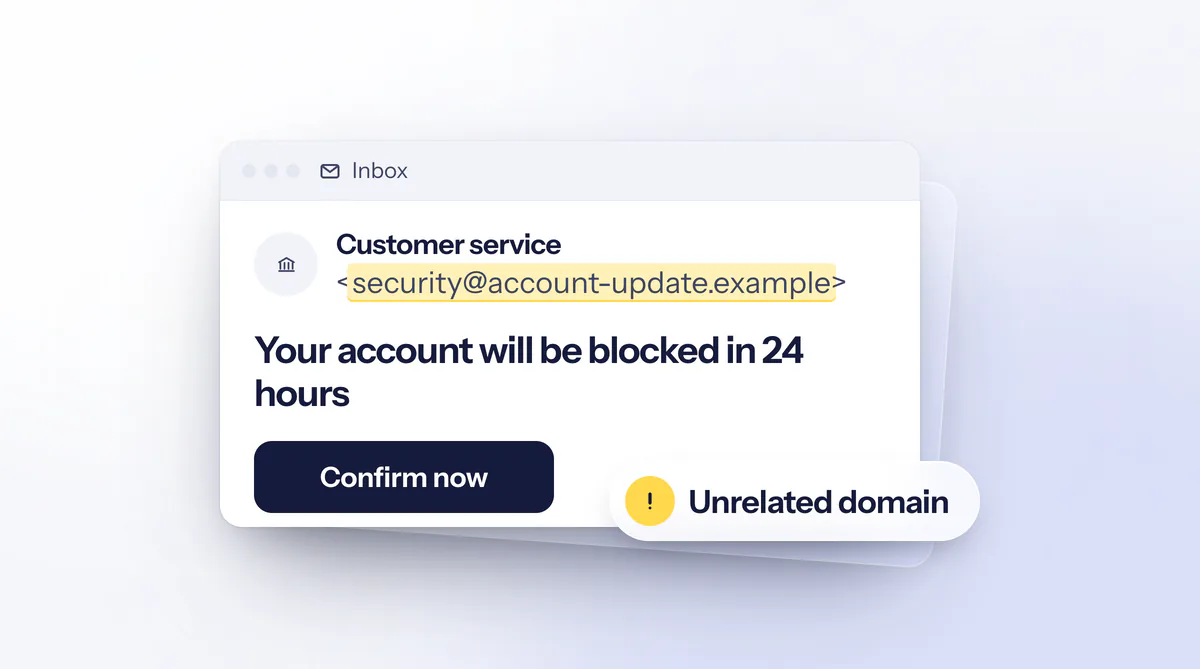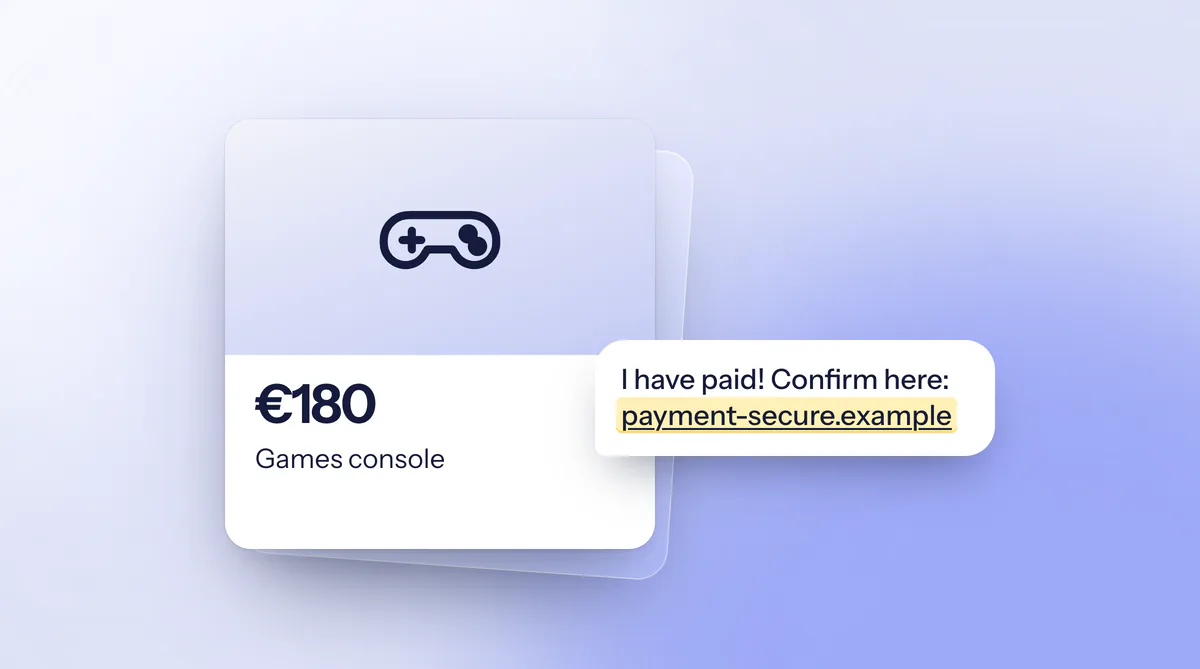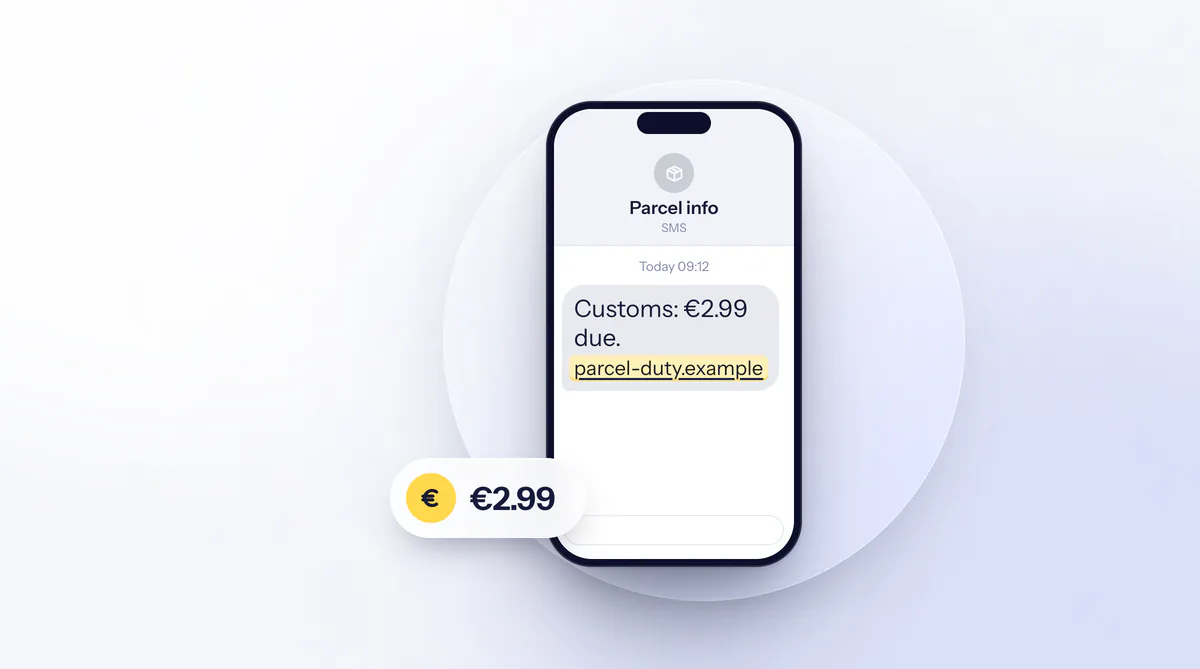
The parcel texts reported to the Verbraucherzentrale, the German consumer advice centre, ask for between 0.99 and 3.99 euros, supposedly on behalf of Deutsche Post, DHL or UPS. In May 2023 German customs reported recipients who had transferred the usually small amount straight to the federal treasury or wanted to pay it in cash at a main customs office. The messages come neither from customs nor from the parcel service. Follow the link and you land on a page that asks for personal data, above all credit card details.
When a customs fee is genuine
Since 1 July 2026 the customs-free threshold of 150 euros no longer applies, and for shipments up to 150 euros from non-EU countries that go to consumers as distance sales, customs levies three euros per goods category. Since 1 November 2026 a handling fee of two euros per item has been added, which carriers or retailers usually handle. So a charge of a few euros tells you nothing about whether a text is genuine. What gives it away is how the money is supposed to be collected.
Customs clearance is usually done by the carrier, which advances the duties and invoices you for them on delivery. That is what the customs website says, as quoted by the Verbraucherzentrale. Customs itself writes that it never approaches parcel recipients in this way, sends links or demands payments. It advises deleting such messages and points out that with authorities you have a sufficient period to find out whether a letter is genuine.
The Verbraucherzentrale describes one exception. Some parcel services let you pay before delivery if you have registered beforehand and chosen to be notified of customs fees by text or email. Those messages always carry a tracking number and the sender’s name. Whether a parcel is on its way to you at all you can see in the carrier’s app or on its website, if you open it yourself.
Parcel service, bank, tax office
In 2023 the Bundesnetzagentur (the Federal Network Agency) received many complaints about texts and messenger messages demanding a customs fee or a “supplementary payment” so that a parcel can be delivered. The senders show German mobile numbers or international numbers. Other versions collected by the Verbraucherzentrale claim that a house number is missing for delivery, or announce a voice message. Some pose as a bank or the tax office. The technical term for all of them is smishing, from SMS and phishing, and according to the BSI (the German federal cyber security agency) every one contains a link leading to malware or to phishing pages. How sender names are spoofed is explained in the guide Text message fraud and spoofed senders.
You can have the text or a screenshot checked under Check a message and the sender number under Check a phone number without opening the link. If you know the supposed sender, your bank for instance, the BSI advises calling them to ask. You can report the text through the Bundesnetzagentur’s complaint form. By its own account it has had numerous German mobile numbers switched off, while foreign sender numbers cannot be switched off.
If you tapped or entered something
What to do now depends on how far you got. On Android, the BSI says, the link offers an app that spies on address data and sends further texts. On iOS you usually land on advertising or phishing pages. The steps come from the BSI, the Bundesnetzagentur and the Verbraucherzentrale.
What happened?
Only received the text
- Do not tap the link
- Block the sender
- Delete the message
- Report it to the Bundesnetzagentur
Tapped the link, entered nothing
- Do not let an app install
- Update the device
- Check the account for unknown debits
- Inform your mobile provider
Entered card details
- Contact the bank at once, block the card
- Report unknown debits as unauthorised
- File a police report
Transferred or paid an amount
- Call the bank or card issuer at once
- File a report, note the case number
- Write to the recipient bank
- Ask about a chargeback on the credit card
Steps based on the Bundesnetzagentur, the BSI and the Verbraucherzentrale, as of 17 Nov 2026.
Sources: BSI: Smishing, SMS phishing; Verbraucherzentrale: Credit card and account fraud
- Install no app.
If the page offers you an app, do not let it install. Load apps only from the known stores and switch off installation from unknown sources.
- Flight mode and mobile provider.
If you clicked the link or installed an app, switch on flight mode so that no further texts are sent, and inform your mobile provider. You can also have a third-party billing block set up there.
- Block the card.
If you entered credit card details, contact your bank at once to have the card blocked. The blocking hotline 116 116 blocks credit cards, girocards and online banking, though not every bank takes part.
- Report debits.
Check your account and payment service for debits you did not initiate. Report each one to the bank expressly as unauthorised, with date, amount and recipient, preferably in writing or by email.
- File a police report.
The Verbraucherzentrale advises reporting online, with screenshots and the fraudulent message attached. Pass the case number on to your bank. Take the smartphone along as evidence.
- Reset the device.
If malware has been installed, reset the device to factory settings, but only after the report and after backing up important data locally.
If you have already paid
A credit card payment can be cancelled through the chargeback procedure at the card-issuing bank, which may charge a processing fee. A bank transfer is harder. Once the bank has executed it, it can no longer be reversed, according to the Verbraucherzentrale, and because many transfers are booked in real time, even a quick call usually does not help. There is still one route. You find the recipient bank from the IBAN and write to it with the case number and the transfer details, so that it can consider blocking the account on suspicion of money laundering.
An authorised direct debit you return within eight weeks of the debit, an unauthorised one up to 13 months afterwards. If you did not initiate and authorise a payment yourself, the bank must refund it without delay under Section 675u of the German Civil Code (BGB), at the latest by the end of the business day after you notify the bank. Under Section 676b you must notify the bank without delay after noticing it, and claims are excluded if you report later than 13 months after the day of the debit. If the bank refuses the refund, for example by alleging gross negligence, the Verbraucherzentrale names the arbitration body listed in your bank’s imprint and an assessment by a lawyer.
File your report with the police. Online stations and offices in Austria and Switzerland are listed under Where to report it, further payment routes and deadlines under Already paid?.