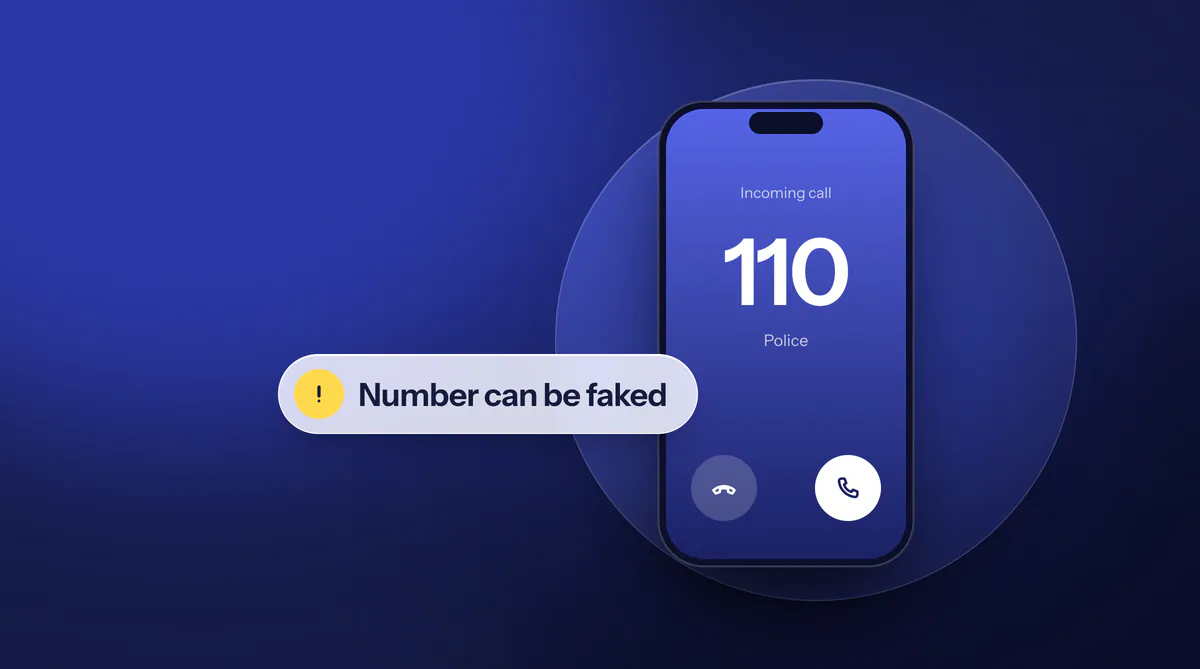
The screen shows 110. The caller introduces himself as a police officer, talks of a planned burglary and announces a plain-clothes colleague who will collect cash and jewellery so that the valuables are secured. If he calls your mobile, German Police Crime Prevention says, he can keep you on the line until the handover so that you speak to nobody. The 110 on the screen is faked as well.
Three calls with the same pattern
According to the police and the consumer advice centre, the calls often target older people. In a shock call you or a relative supposedly caused a serious accident and can only avoid custody against bail, or an operation is said to be unpaid. The callers pose as relatives, acquaintances or officials such as police officers.
In the fake-police variant a burglary is supposedly planned, as in the call above. The consumer advice centre describes another version with automated announcements in the name of Europol or Interpol. A caller, often speaking English, then talks of charges against you or your family and demands transfers to foreign accounts or in cryptocurrency.
The fake bank employee claims your account was hit by a hacker attack. He asks for a TAN or access details, or wants you to transfer large sums to foreign accounts. BaFin calls this vishing. In all three cases the callers create fear or urgency, keep you on the phone and steer you to a handover or an approval.
- 1CallThe screen shows 110, your area code or your bank.
- 2StoryAccident, burglars or an endangered account.
- 3PressureStay on the line, tell nobody, it is urgent.
- 4DemandBail, valuables, a TAN or a transfer.
- 5HandoverA courier at the door or approval in the app.
Recreated sequence based on descriptions by German Police Crime Prevention, the consumer advice centre and BaFin. Individual calls differ.
Sources: Polizeiliche Kriminalprävention: Schockanrufe; Polizeiliche Kriminalprävention: Falsche Polizisten
How to tell a fake call
The displayed number does not help. Technically, the number that appears for the person called can be replaced with another, which is called caller ID spoofing. The Federal Network Agency writes that criminals can display real numbers this way, including foreign ones that belong to someone else, or unassigned numbers. Even the bank’s genuine number can appear on the screen, BaFin points out. If you call back, the genuine holder of the number may answer.
No call lawfully appears with 110, according to the Federal Network Agency, and such a display is always manipulated. Police emergency call centres call back from the local numbers of the stations, and calls that show 110 are now cut off before they reach you. With any other number, even one with your local area code or your bank’s name, the display is only a hint to the consumer advice centre.
What gives the fraud away is what the caller wants. According to the consumer advice centre, the police never ask for valuables by phone, according to the police never for sums of money, and BaFin writes that banks never request a TAN or login details by phone. The police advise giving no details of your personal and financial situation on the phone and never handing money or valuables to strangers. What a faked sender looks like in a text message is shown in the guide SMS fraud with a faked sender.
What to do while the phone is ringing
Hang up, even if the caller insists. For shock calls the police recommend hanging up at once. That is not rude, and it gives you time to collect your thoughts. Then call yourself, relatives on the number you know, the police via 110 or a number you look up yourself, the bank via the number on your card or statement. Do not use the redial button, the consumer advice centre advises.
Until then keep everything to yourself: details of family and assets, TANs, approvals in the banking app, money and valuables. To prevent such calls, the police recommend a family code word and short phone book entries without first names, so the callers learn less about you. Enter a number you want to place at Check a phone number to see whether reports exist for it. An unremarkable result is no guarantee.
If you have already handed over money or a TAN
Act in this order, even if it feels embarrassing.
Have you already handed anything over?
Yes, transfer or TAN approval
- Call your bank on a known number or dial 116 116
- Have access and card blocked
- Ask for the payment to be recalled
- Report to the police
Yes, cash or valuables
- Dial 110 at once
- Note the person’s description and the time
- Tell your bank if you withdrew cash
- File a report
No, you only hung up
- Note the number and the time
- Warn family and neighbours
- Check your statements over the next days
Orientation, not legal advice. The blocking hotline 116 116 blocks cards and online banking, not cash.
Sources: Sperr-Notruf 116 116; § 675u BGB; § 676b BGB
- Bank and blocking hotline.
Call your bank on a known number or dial 116 116. The blocking hotline is available every day around the clock and blocks girocards, credit cards and online banking. Have your IBAN or account number ready.
- Police.
File a report with the police, and for cash or valuables call 110 at once. The routes by state are under Where to report it.
- Secure evidence.
Call log with time and number, statements and messages. How to do it is under Already paid?.
- Report the number.
The Federal Network Agency accepts complaints about manipulated numbers. It asks for a quick report because traffic data are usually deleted after seven days. It is not responsible for criminal prosecution; the police are.
What the law says about payments
If money was debited without your consent, the bank must refund the amount without delay under Section 675u of the German Civil Code, at the latest by the end of the business day after your report. Under Section 675v(1) it can claim up to 50 euros where a lost, stolen or otherwise misappropriated payment instrument was used or a payment instrument was otherwise misused. For fraudulent conduct or an intentional or grossly negligent breach of certain duties you are liable under paragraph 3 for the whole loss. You must inform the bank without delay; under Section 676b, claims lapse if you do not inform it within 13 months of the debit at the latest.
If you triggered the transfer or the approval yourself, the question of consent is harder, and the bank may point to your involvement. That depends on the individual case, and a consumer advice centre can assess it. These rules only govern payments through a bank, so they give no right to a refund for cash and valuables you handed over. There, the police report is what counts. More on what to do after a transfer is under Already paid?. This section is not legal advice.