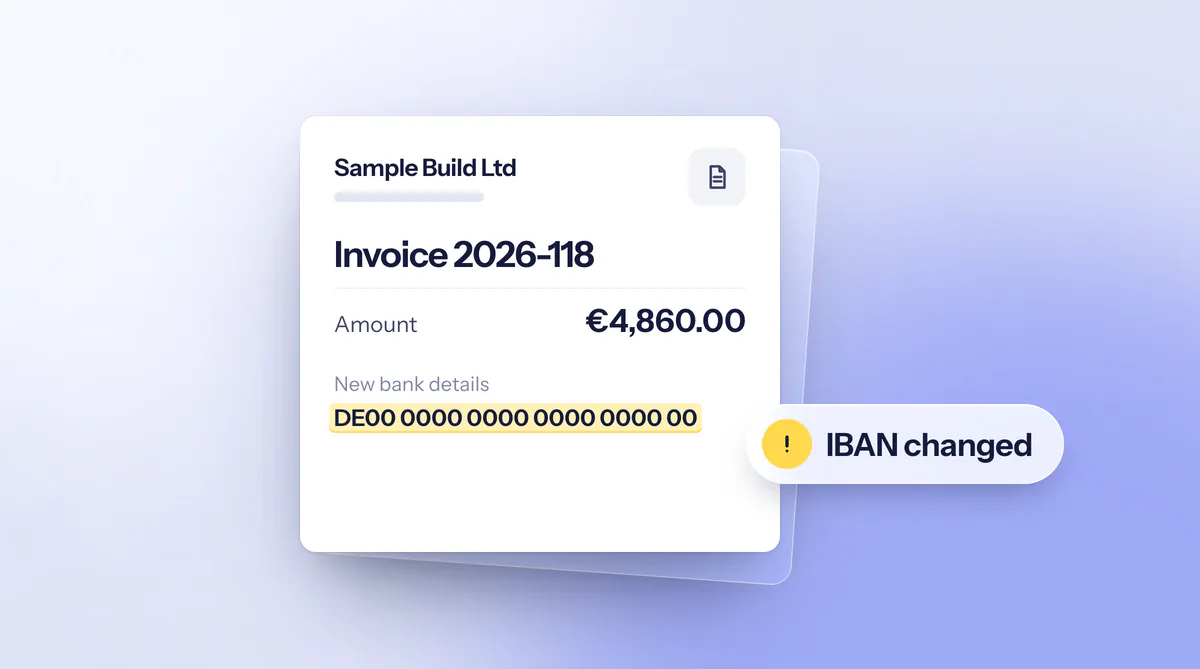
In Koblenz, a hacker had taken over a fence builder’s mailbox and given his customer a new account number. The customer paid into the foreign account, and on 26 March 2025 (8 O 271/22) the Koblenz Regional Court ruled that the tradesman can still claim his fee. Since 9 October 2025 your bank has compared name and IBAN before you transfer. That helps with typing errors. If the account belongs to the fraudster and the name fits, the check stays silent.
How the new IBAN gets onto the invoice
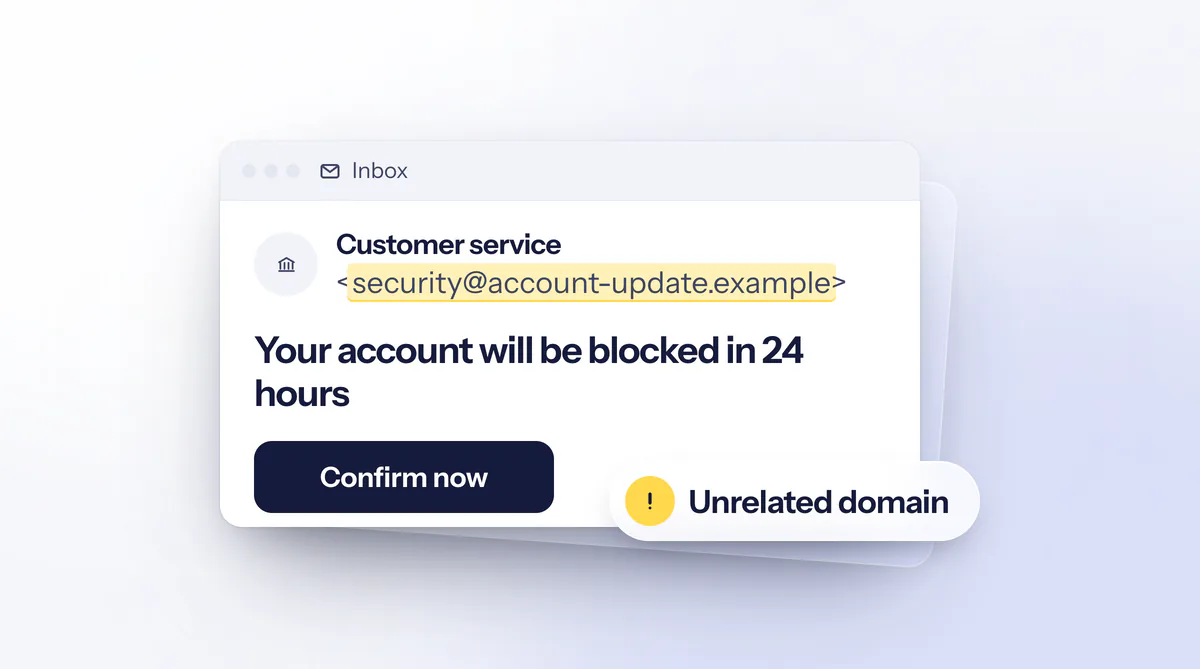
In invoice fraud, says the German Federal Criminal Police Office (BKA), someone contacts you on behalf of a supplier, service provider or lender, by telephone, letter, email or a combination, and asks you to change the bank details for future invoices. The fraudsters control the new account. Private customers are reached through tradespeople or landlords: often the tradesperson’s invoice arrives by email, followed shortly by a second email with a different account number. Sometimes someone has taken over the genuine sender’s mailbox, as in the Koblenz case.
What Verification of Payee checks
Verification of Payee compares the name you enter with the name the payee’s bank holds for the IBAN. Under EU Regulation 2024/886 it must take place before you can authorise the transfer. In euro-area states this has applied since 9 October 2025. According to BaFin, the German financial supervisor, the obligation covers instant and regular euro transfers from current account to current account. Direct debits and savings or loan accounts are excluded, and existing standing orders continue without a check.
BaFin describes three outcomes, and the consumer advice centre names a failed check as a fourth. How your bank displays them can differ.
| Result | Meaning |
|---|---|
| Match | Name and IBAN belong together. That only says the account is in this name. |
| Close match | The bank shows you the registered name. Compare it with the first invoice and the firm’s legal notice before you correct it. |
| No match | The bank warns of a transfer to the wrong payee. According to the consumer advice centre, you must on no account release it and should clear up the mismatch through an official channel. |
| Verification not possible | No clear statement can be made. Here too the consumer advice centre advises against paying without asking the payee. |
BaFin advises taking the payee name from the invoice, which with a changed invoice means the first, genuine one. The consumer advice centre notes that the check makes invoice fraud with manipulated account details harder but does not cover phishing and taken-over accounts.
What it does not do
The Bundesbank writes (our translation): “The check can only identify discrepancies between IBAN and name. Nevertheless, a payment request can always be fraudulent as a whole.” If the fraudster names a person in the email and the account is held in that name, the bank reports a match although the money goes astray. A plausible-sounding name is enough for that.
Money mule accounts slip through as well. According to German police crime prevention, money mules are recruited through job offers so that their account serves other people’s payments, and they pass the money on, often abroad. Name and account fit, and the holder may not know what they are lending them for. If the email comes from a hijacked mailbox, it even comes from the genuine sender, and a comparison of name and IBAN says nothing about that. Existing standing orders, direct debits and accounts outside the rule run without this check anyway.
What to do before you transfer
- Compare the IBAN.
Put it next to the number on the first invoice or from earlier payments, and look at the country code at the start too. A German firm with a foreign IBAN is a reason to ask.
- Call a number you know.
The BKA advises using contact details from earlier correspondence and not those in the message asking for the change. Have the IBAN confirmed on the phone.
- Have the email checked.
The email check lets you examine the invoice email. More on forged senders is in the guide Recognising and reporting phishing emails.
- Check the IBAN.
The IBAN check recalculates the check digits and shows whether there are reviewed fraud reports for the number. It names no account holder. A result without a report is no guarantee.
- Read your bank’s result.
With a match the call is still needed. With a close match you compare the name, with no match or no verification you do not release.
If the money has already gone
Under the EU regulation, an instant transfer must be available to the payee within ten seconds, and the Bundesbank speaks of ten seconds at most as a rule. Under section 675p of the German Civil Code, a payment order can in principle no longer be revoked once it has reached the bank. Because the booking is instant, a quick call usually no longer helps, the consumer advice centre noted as of 3 August 2026. Try it anyway.
Where does your transfer stand?
Not yet released
- Do not release
- Ask on a known number
- Keep the email
Just released
- Call your bank now
- Ask for a recall
- Keep the receipt
Already booked
- Still inform your bank
- Report to the police
- Warn the real sender
According to the Bundesbank, a return depends on the payee’s consent. Nobody can promise one.
Sources: Bundesbank: questions and answers; Section 675p German Civil Code; Verbraucherzentrale: internet fraud
You file the report with your state’s online police station, listed under Where to report it. The BKA advises always involving the police in cases of attempted fraud, even without a loss. What the bank can try, and what you do yourself first, is under Already paid?.
Who pays if it goes wrong
In the Koblenz case, payment into the foreign account had not discharged the fence builder’s claim, so he could still demand his fee. According to Legal Tribune Online, the court considered a simple query appropriate. The tradesman received 8,250 of 11,000 euros because the customer had a counterclaim over the poorly secured mailbox. That was a single case and is not legal advice.
Against your own bank, section 675y of the German Civil Code in our understanding usually does not help. The provision covers defective execution of an order. Where the unique identifier is wrong, the bank is not liable, but it must try to recover the amount and, on request, give you the available information for your claim. If you entered the IBAN deliberately as it stood in the email, you gave the order yourself. A consumer advice centre or a lawyer can assess your case.
Fraudsters also name an account for prepayment when you buy online. How the name check applies there is covered in the article Verification of Payee and fake shops from our sister service fakeshop.ai.