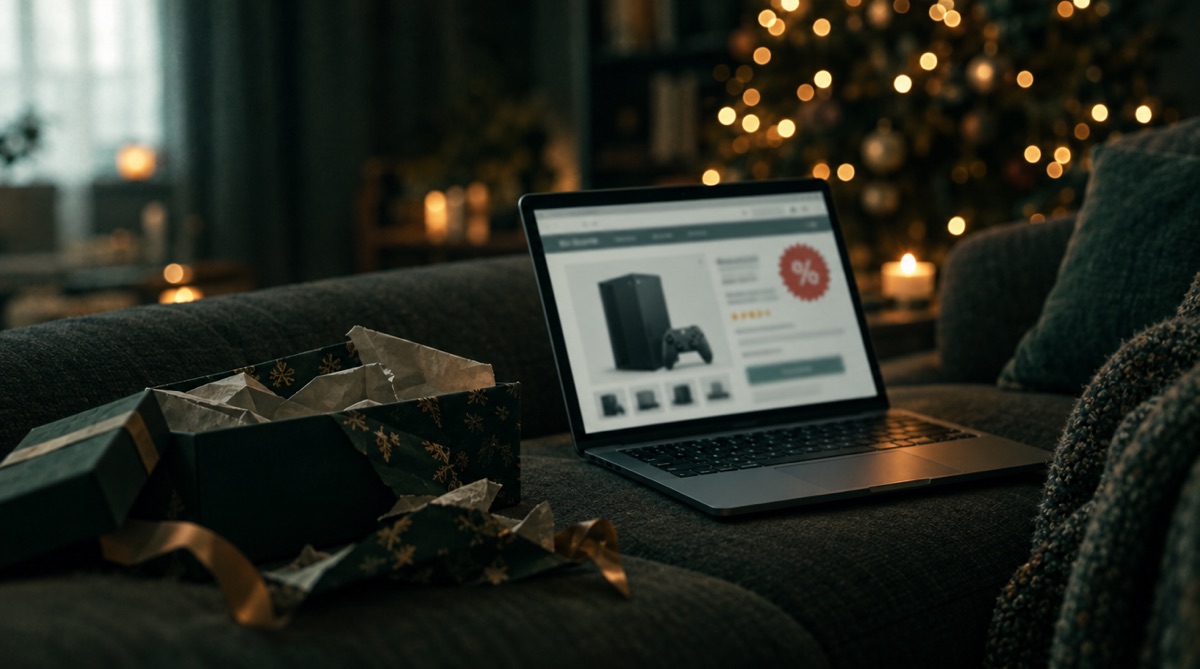
From the end of November the Christmas shopping season begins, kicked off by Black Friday and Cyber Monday. Many people then look for a specific present, often one that is currently in short supply. Fake shops exploit this. The German police crime prevention service (ProPK) describes how they lure buyers with popular products such as the latest games console or the current smartphone, often while these have long been sold out at competitors.
In December 2024 the consumer advice centre of Lower Saxony warned that the number of fake shops keeps growing and that they are increasingly professional. Under time pressure in particular, the risk of falling for such a provider is high. Before Christmas both come together: time pressure and scarcity.
How fake shops operate before Christmas
- Scarce goods are in stock. The shop has the toy or console that well-known shops have not had for weeks. For the police, this is a typical bait.
- The price is strikingly low. The police cite ads with unbeatable prices as an example, such as the latest smartphone for half the price. In their words, a price well below market value is usually a red flag, especially on sales days.
- Only prepayment at the end. Credit card, cash on delivery or PayPal are shown. In the end you can only pay by bank transfer. The consumer advice centre comments that it should be the other way round: first the goods, then the money.
- The legal notice is missing. “A missing legal notice is always a no-go,” writes the consumer advice centre. The police also name an incomplete legal notice or an address abroad as warning signs.
- Seals without a link. The police advise being sceptical when a shop shows trust seals that do not link to their issuers. How to check a seal is explained in the article Forged trust seals.
The police describe a typical case: via a search or an ad, someone comes across a cheap smartphone. The shop looks professional, shows seals such as “Verified shop” and many payment methods. In the end only prepayment works. Days after paying, there is no smartphone and the seller can no longer be reached.
Where you come across such shops
In 2021 Watchlist Internet analysed how victims ended up in fake shops. Of 139 reports, 36 percent came via social networks, most of them via Facebook ads. 33.1 percent found the shop via Google, meaning search, image search or Google Shopping. The figures are a few years old. They show that paid ads and search results are no proof of a reputable dealer.
If an ad takes you to a shop, note the address and check it calmly before ordering. The shop check shows you the age of the domain, the details in the legal notice, the payment methods offered and whether the domain is on a warning list. For every feature it states what was found.
Judging discounts: the lowest price of the last 30 days
Crossed-out prices are everywhere before Christmas. Since the revision of the German Price Indication Ordinance, anyone announcing a price reduction to consumers must, under Section 11 PAngV, state the lowest total price they charged in the 30 days before the reduction. A 60 percent discount therefore refers to the shop’s own price during that period.
Genuine retailers do not always comply either. In a joint check by authorities from 23 EU countries, Iceland and Norway around Black Friday and Cyber Monday 2025, 30 percent of the 314 online traders checked referenced their discounts incorrectly. 18 percent used pressure tactics such as claimed scarcity or countdown timers. In more than half of these cases this was misleading, for example because the scarcity was invented.
For you this means: a large discount and a countdown say nothing about whether an offer is good. They say nothing about whether the shop delivers either. Compare the final price with two or three well-known retailers. If it is far below and the goods are sold out there, that is a reason to take a closer look. More in the article Fake brand outlets before Black Friday.
Counterfeit branded goods
Not every dubious shop delivers nothing at all. Some deliver counterfeits. German Customs write that most goods infringing intellectual property rights come from non-EU countries. The consumer advice centre of Lower Saxony points out that customs inspect and seize shipments if trademark infringement is suspected.The present then does not arrive. According to the centre, counterfeit products may also contain harmful substances such as toxic paints. For children’s toys, this is a reason of its own to be careful with strikingly cheap branded items.
Paying safely
The police advise preferring purchase on invoice and never paying via cash transfer services or with voucher, gift or prepaid cards. Payment methods with buyer protection can also be safe if you know how they work and which conditions apply. Deadlines and contacts per payment method are under Getting money back. Why bank transfers to unknown shops carry the greatest risk is explained in the article The prepayment trap.
Withdrawal and exchange: what applies with genuine retailers
With a genuine online retailer you can usually withdraw from a purchase. Under Section 355 of the German Civil Code the withdrawal period is 14 days. For deliveries of goods, under Section 356 it only begins once you or a person you named have received the goods. Presents bought in a shop, by contrast, can only be exchanged if the retailer offers this as a goodwill gesture, writes the consumer advice centre.
With a fake shop these rights do not help, because there is nobody to honour them. A right of withdrawal therefore does not replace checking before you buy.
Presents from private sellers
When a present can no longer be found in any shop, many people turn to classifieds sites. Different rules apply there. There is generally no statutory right of withdrawal when buying from private individuals, and scams such as triangle fraud or fake payment links specifically target buyers and sellers.Which payment methods the platforms themselves classify as safe, and how to recognise a dubious offer, is explained in the article Classifieds fraud.
Shortly before Christmas: parcel messages
If you order a lot, you get a lot of parcel messages. During this time, fake texts about delivery problems or customs fees look particularly credible. How to recognise them is explained in the article Parcel and customs texts.
Checklist before ordering
- Check the address.
Is the exact domain on a warning list? Look it up in our warning list.
- Read the legal notice.
Name, address, contact, trade register for companies. If anything is missing, do not order there.
- Compare prices.
If the goods are sold out elsewhere and much cheaper here, take a closer look.
- Check payment methods to the end.
Go through the order process up to the payment page before you decide.
- Search for experiences with the domain.
How to read reviews properly is explained in the article Experiences with an unknown shop.